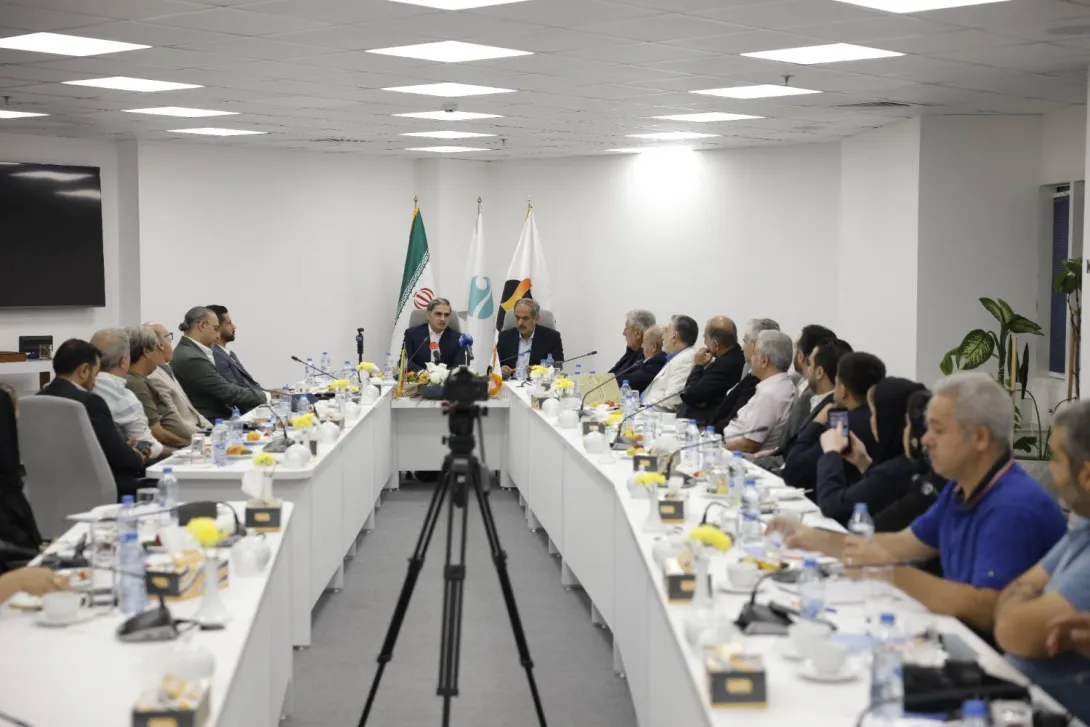
According to the Public Relations and International Affairs of the Kish Free Zone Organization, Mahdi Moslemkhani, in a meeting with members of the Kish Island Investors and Entrepreneurs Association, described the performance and programs of the Deputy of Construction and said: at the start of the new term, about 30 major and multi-year stalled files on the island were identified, whose total stoppage period amounted to more than 400 years.
Resolution of 18 major and multi-year files
He added: from Tir until mid-Bahman of last year, about 70 percent of the working time of the Deputy of Construction was devoted to reviewing these files and the activities of the Commission for Removing Obstacles to Multi-year Projects, and during this period, 18 files were resolved while simultaneously observing the rights of public funds and investors.
Moslemkhani continued: some of these files had been under consideration in judicial authorities for years and verdicts had been issued for or against the organization; however, the agreements reached after expert reviews were approved by higher supervisory bodies, including the General Inspection Organization of the Country.
He reported following up on five other files in 1405 and stated: the activation of any of these projects can create significant financial turnover and economic activity on the island. Our effort was to return projects that had been stalled for years to the execution cycle, instead of implementing superficial and short-term schemes.
35-megawatt increase in Kish’s power generation capacity
The Deputy of Construction and Infrastructure of the Kish Free Zone Organization, referring to measures taken in the field of power infrastructure, said: completing the island’s 132-kilovolt network requires more than 20 million dollars in funding, and the increase in foreign exchange costs had made implementation of this project problematic in recent years; therefore, financing large projects by conventional methods was not possible and new paths had to be defined.
He added: the equipment required to increase the island’s power generation capacity by 35 megawatts has been purchased, but due to the country’s conditions and transportation restrictions, the complete installation of this equipment was delayed. After these restrictions are lifted, installing and commissioning the equipment and adding the new capacity to the island’s power grid will take about 40 days.
Targeting construction of a 90-megawatt solar power plant
Moslemkhani also announced targeting the creation of 90 megawatts of solar power plant capacity in Kish and said: so far equipment for 24 megawatts has been imported to the island; three megawatts have reached the installation stage, another six megawatts are being installed, and the land required for implementing the remaining 15 megawatts is being prepared.
He stated that the development of solar power plants is important in terms of supplying clean and cheap energy as well as passive defense, and added: with the commissioning of the 24-megawatt capacity, Kish’s share of solar energy from the island’s total power production will reach about eight percent, and achieving the 90-megawatt target can significantly elevate Kish’s position in the use of renewable energies.
Definition of more than 30 public–private partnership packages
The Deputy of Construction and Infrastructure of the Kish Free Zone Organization further referred to obtaining authorization to convert assets and said: after several months of follow-up, this mechanism was defined to provide resources and settle the organization’s obligations, and now its executive process has reached final stages.
He stated: to prevent a recurrence of financing problems for contractor projects, implementing new plans in the form of public–private partnerships was placed on the agenda. In this model, an organizational construction project needed by the organization is linked to a participatory or investment project, and the cost of executing the construction project will be provided from the organization’s share in the participatory plan.
Moslemkhani announced the drafting of more than 30 packages within this framework and added: alongside each construction project, a corresponding investment project has been defined so that the investor, while benefiting from the economic returns of the plan, also executes part of the island’s construction needs.
He emphasized, inviting investors inside and outside the island to participate in these plans: calls will be published publicly and the organization is not seeking to create a monopoly in the field of investment. The entry of capital, financial resources and new ideas will benefit the organization, current investors and the island’s economy.
Renovation of 170 vehicles in the public transport fleet
The Deputy of Construction and Infrastructure of the Kish Free Zone Organization cited renovation of the public transport fleet as another program of this deputy and said: last year, with the definition of a new mechanism, about 170 vehicles were renovated and continuation of this trend will also be pursued within public–private partnership packages.
He named Kish’s gradual move toward a low-carbon island and ultimately carbon-zero as long-term goals of the organization and added: achieving this goal is difficult, but by developing clean energy and renovating the public transport fleet, it is possible to move toward it.
Waste burial; a red line for the Kish Free Zone Organization
Moslemkhani, in another part of his remarks, referred to the status of waste management and said: in the past year negotiations were held with more than 15 investors wishing to operate in the recycling sector, but proposals from over 12 entities were not accepted due to lacking a specific plan for removing final waste from the island.
He emphasized: the red line of the organization in the new plan is the burial of waste on Kish Island. Every plan must, in addition to recycling, have a practical solution for removing non-recyclable wastes from Kish.
The Deputy of Construction and Infrastructure of the Kish Free Zone Organization, referring to progress in reviewing two proposals in this field, added: the goal is that by attracting a new investor, in addition to improving the recycling process, landfill disposal on the island will be eliminated.
He also reported drafting a plan to organize the current recycling site and said: this area has suitable extent and outlook and after restoration and cleaning it can be converted into an investment and tourism project, turning the existing threat into a developmental opportunity for the island.
Start of regeneration of the island’s valuable fabric
Moslemkhani announced the start of the process of selecting a consultant to prepare a regeneration plan for the island’s valuable fabrics and said: the terms of reference for this plan have been finalized and after selecting the consultant, the worn and intervention-needing areas will be reviewed.
He added: the goal of this program is not only attracting investment, but renovating worn sections, preserving architectural and historical identity and organizing areas that require specialized intervention. The final plan, after review and approval in urban planning authorities, will form the basis of executive actions.
The Deputy of Construction and Infrastructure of the Kish Free Zone Organization concluded by emphasizing the use of the experience of investors and economic activists and said: the Kish Investors and Entrepreneurs Association has valuable history and experience and the cooperation of this body can help amend plans, accelerate project implementation and record part of the island’s development history.