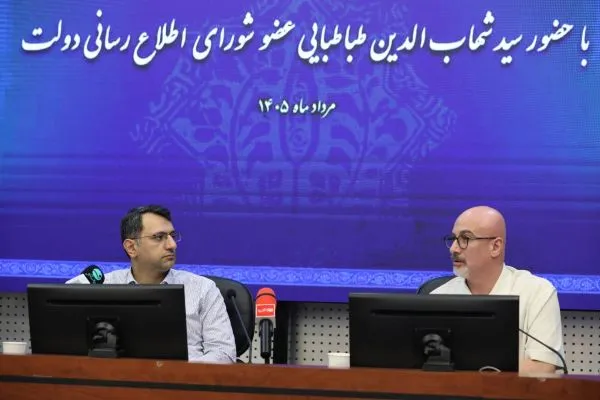
According to the Public Relations and International Affairs of the Kish Free Zone Organization, Seyyed Shahabeddin Tabatabaei in this meeting, while appreciating the patience, dignity and cooperation of media activists, said: In recent years Iranian society, relying on the steadfastness and cooperation of the people, has passed through many events, and the media, as representatives and narrators of the people, have played an important role in reflecting this resilience and cooperation.
He also, praising Mohammad Kabiri and the managers of the Kish Free Zone Organization, described problem‑solving as a prominent feature of the island’s management over the past 20 months and added: Some managers devote much of their time to explaining aspects of issues, but Kish management has tried, instead of repeatedly talking about the knots, to act to untie them and after achieving results, share the actions taken with the people.
The member of the Government Information Council, noting that some managerial actions may not have immediate manifestation, stated: Kish management’s approach has been based on achieving definitive results; although it is necessary that the actions taken and the resulting outcomes be narrated and explained to public opinion more than before.
Tabatabaei linked the effectiveness of managers to their communications, planning and ability to solve problems and said: The length of a management term alone is not determinative and what matters is the extent of a manager’s impact in resolving issues and advancing affairs.
Referring to the presence and follow‑ups of the CEO of the Kish Free Zone Organization in meetings of the Ministry of Economic Affairs and Finance, he added: Some topics pursued by Kish management in these sessions have paved the way for problem‑solving and for other free zones to benefit from their results, and these actions must be properly communicated to the people.
The member of the Government Information Council went on to say that preserving Kish’s identity and brand is meaningful alongside maintaining the independence and professional mission of the media and said: An independent media must preserve its media identity and at the same time act responsibly with regard to the social and economic impacts of its narratives.
Tabatabaei added: When producing and publishing news, the media must consider to what extent the published content helps societal calm and problem solving. The criterion of a media’s impact should not be merely the number of views and shares of a content, but its consequences for the people and the island’s long‑term interests should also be taken into account.
Emphasizing Kish’s national status, he stated: The wide reflection of the island’s news among public opinion and various institutions indicates that Kish is part of Iran’s image and this position can be used to further introduce the island’s capacities, capabilities and identity characteristics.
The member of the Government Information Council, referring to Kish’s natural and social capacities, said: Sea, beach, sunshine, tranquility, stability and security are among the important components of Kish’s identity and the island can, relying on these features, be a messenger of tranquility and a symbol of resilience and motivation for continuing the path.
Tabatabaei continued: The society’s ability to maintain the flow of life and continue on its path is a valuable asset and Kish can, by displaying its calm, steadfastness and dynamism, present a lasting image of this capacity.
The member of the Government Information Council, stressing the importance of professional criticism, said: A strong and powerful manager welcomes criticism and in specialized meetings views and critiques should be presented explicitly. Alongside this, attention to Kish’s position and public image is necessary; because strengthening this image will benefit the people, economic activists and the island’s future.
Referring to studies done on societies’ experiences in different historical periods, he added: Examining the experiences of nations shows that societies that have been able to successfully continue their path formed cooperation at the highest possible level and, relying on this cooperation, created achievements beyond the past.
Tabatabaei also, referring to the preparation of a list of government actions on the occasion of its second year of activity, said: Actions carried out in Kish should also be properly compiled and narrated so that the results of activities and the problem‑solvings carried out are explained to public opinion.
He considered the media part of the process of solving issues and added: The media’s mission is not merely to state and explain a problem; the media can create a two‑way connection between society and managers and by conveying topics, fact‑checking information and following up actions, help achieve results.
The member of the Government Information Council asserted: The media can reflect topics to managers for review and follow‑up and after necessary actions are taken, provide audiences with a complete narrative of the issue raised, the media’s follow‑up and the result achieved. Such an approach shows that along with identifying issues, the media has also played a role in the process of solving them.
Tabatabaei added: Professional accompaniment and support by the media can increase the ability of Kish managers to pursue the island’s demands in ministries and various agencies, including matters related to customs, and facilitate achieving more desirable results.
It is worth noting that the strategic meeting on preserving Kish’s identity and brand was held at the Kish International Conference Center with the presence of Mohammad Kabiri, CEO of the Kish Free Zone Organization, Seyyed Shahab‑eddin Tabatabaei, member of the Government Information Council, the acting deputy for cultural, artistic and social affairs, the acting head of public relations and international affairs of this organization and a number of managers and media activists.